
Questions and Red Flags Before Paying a Machinery Supplier
Review the legal, technical, banking, contractual and behavioral warning signs that machinery buyers should resolve before paying a supplier deposit or balance.
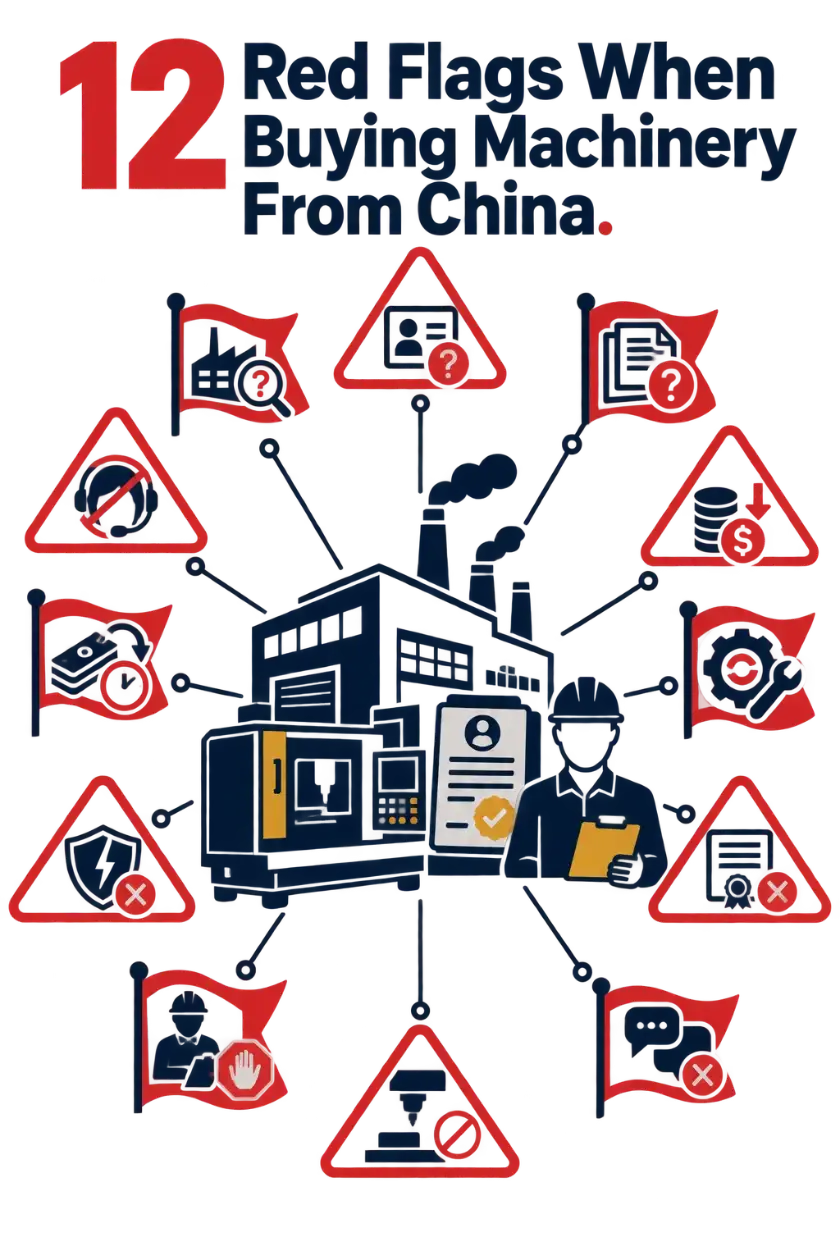

Payment is the point where unresolved supplier and technical risks become financial exposure. Machinery orders often require deposits because factories must procure components and schedule production, but urgency should not replace verification.
This guide is a practical purchasing-risk checklist, not legal advice. Contract enforceability, sanctions, tax, customs and destination compliance may require qualified professional review.
Use the Chinese manufacturer verification guide before supplier approval and the complete industrial machinery sourcing guide for the wider project.
Why machinery payment risk is different
Industrial equipment is often customized, difficult to resell and expensive to correct after shipment. A payment dispute may involve not only money but also unfinished engineering, supplier-owned components, proprietary software, export deadlines and production downtime.
Risk exists at every milestone:
| Payment stage | Primary risk | Evidence expected |
|---|---|---|
| Deposit | Paying an unsuitable or misidentified supplier | Verified entities, signed specification, scope and payment basis |
| Progress payment | Paying ahead of actual production | Approved milestone records, images, documents or inspection evidence |
| Pre-shipment balance | Losing leverage before defects are closed | Passed inspection or FAT and closed non-conformities |
| Retention or final acceptance | Unresolved commissioning or documentation obligations | Agreed site acceptance, documents, training or warranty deliverables |
Red flag 1: Company and bank details do not match
The Chinese legal name should be traceable across the business license, quotation, contract, invoice and beneficiary details. A manufacturer may legitimately use a related export company, but the relationship and allocation of responsibility must be clear.
- The beneficiary name is written exactly as registered by the bank
- The beneficiary is the contracting entity or a documented related export entity
- The account country and bank location are commercially explainable
- Payment instructions were received through a verified supplier channel
- Any change was reconfirmed through a previously known contact
- The supplier provided formal documentation rather than only a chat message
- No employee or unrelated personal account is being used without a lawful, verified basis
Email accounts and messaging profiles can be compromised. Never confirm a changed beneficiary using only the message that announced the change.
Red flag 2: Pressure to pay before technical agreement
Statements such as “the price expires today,” “production must start now” or “the engineer will confirm later” should not override unresolved requirements.
Before deposit, the supplier should have reviewed the application and documented the offered model, performance basis, critical configuration, deviations, scope and acceptance method. If those details are postponed, the buyer may later be told that a missing item or performance change requires additional payment.
Red flag 3: The supplier avoids measurable commitments
Be cautious when the quotation promises “high efficiency,” “international quality” or “stable operation” but does not state guaranteed values and test conditions.
Critical performance should be defined through the industrial machinery RFQ. A supplier that refuses reasonable measured acceptance criteria may not control the claimed result.
Red flag 4: Specifications and answers keep changing
Technical development naturally produces clarifications. The concern is uncontrolled change: model numbers, component brands, capacity, materials or scope shift without a formal revision or consistent explanation.
Maintain a clarification log and issue a final controlled technical agreement. Superseded versions should not remain ambiguous.
Red flag 5: The price is materially below comparable offers
A lower price may reflect manufacturing efficiency, commercial strategy or a valid alternative. It may also indicate excluded scope, lighter components, different rating conditions, limited testing or an incorrect interpretation of the application.
Use a normalized machinery supplier comparison to identify the source of the difference. Do not ask the lowest bidder simply to confirm that everything is included; require line-by-line evidence.
Red flag 6: The factory or supplier role is concealed
Refusal to identify the production site, inconsistent factory addresses, unavailable engineers or certificates issued to unrelated companies may show that the seller is hiding its role.
A transparent trader can be acceptable. The risk is not the label; it is the absence of control and accountability. Review manufacturer vs assembler vs trading company before deciding whether the structure fits the order.
Red flag 7: Inspection or witnessed testing is refused
For significant machinery, the contract should permit appropriate inspection and testing before packing and shipment. Suppliers may reasonably protect confidential areas or schedule access, but complete refusal requires a credible explanation.
If a supplier accepts inspection only after full payment or after the machine is packed, the buyer's ability to verify and correct the equipment is reduced.
Red flag 8: Critical components can change without approval
“Equivalent brand” clauses can permit substitutions that affect efficiency, serviceability, compliance or local availability. Record controlled components and require prior written approval for changes.
The supplier should provide the proposed replacement data and explain equivalence. The buyer should assess the complete technical effect, not only the purchase price.
Red flag 9: Warranty language is vague
“One-year warranty” does not answer:
- When the warranty begins
- Which defects and components are covered
- Whether labor, travel and freight are included
- Who diagnoses the failure
- Required evidence and response times
- Whether replaced parts extend coverage
- What happens when supplier and component-maker warranties differ
Identify the responsible legal entity and service process before payment.
Red flag 10: The supplier discourages written records
Fast communication through calls or messaging is useful, but approvals, deviations, bank details and acceptance commitments should be recorded in controlled documents.
Verbal promises are difficult to transfer when staff change or a dispute occurs. Summarize important discussions and request written confirmation.
What must be complete before the deposit?
- Supplier, factory, contracting entity and payment beneficiary are verified
- Final quotation and technical agreement use controlled revisions
- Mandatory performance and operating conditions are documented
- Critical components and substitution rules are agreed
- Included, excluded and buyer-supplied scope is clear
- Delivery definition, Incoterm and schedule are stated
- Inspection, FAT and acceptance rights are included
- Payment milestones correspond to objective evidence
- Non-conformance, correction and retest responsibilities are defined
- Warranty, spare parts and after-sales responsibility are documented
How should payment milestones be structured?
There is no universal percentage. Structure milestones according to project risk, supplier leverage, component procurement and evidence that can be verified.
- 1Contract effectiveness
Deposit after entity, scope, specification and beneficiary approval.
- 2Engineering approval
Where appropriate, payment after approved drawings, configuration or design review.
- 3Production evidence
Progress payment against a defined milestone and supporting records or inspection.
- 4Factory acceptance
Balance or major payment only after required tests and corrective actions.
- 5Shipment or site acceptance
Retention where commercially agreed for remaining documents or commissioning obligations.
Avoid milestones described only as dates. A date can arrive without the corresponding work being complete.
What should you do when a red flag appears?
- Pause the affected approval or payment.
- Record the inconsistency precisely.
- Request evidence from an authorized supplier representative.
- Independently verify the explanation where possible.
- Update the controlled documents if the explanation is accepted.
- Escalate legal, banking or compliance concerns to qualified specialists.
- Walk away when material risk cannot be resolved.
Professional suppliers should understand that high-value machinery purchases require entity, technical and payment verification.
Before authorizing the pre-shipment balance
Confirm machine identity, approved components, measured test results, open deviation status, documentation, spare parts, packaging readiness and shipping details. Do not let a vessel booking or production deadline replace acceptance evidence.
The balance decision should connect directly to the Factory Acceptance Test and pre-shipment inspection procedures.
Frequently asked questions
- What should I check before paying a Chinese machinery supplier?
- Confirm the legal supplier and beneficiary account, approved technical specification, scope, component schedule, delivery basis, inspection and acceptance rights, payment milestone evidence, warranty responsibility and resolution of every material deviation.
- Is it normal for a Chinese supplier to request a deposit?
- Deposits are common for machinery orders because suppliers may purchase components and reserve production capacity. The percentage and structure depend on the project, but payment should follow a verified supplier, agreed documents and clear milestones.
- What if the bank account name differs from the supplier name?
- Do not pay until the relationship is explained, documented and independently verified. Some factories use related export companies, but an unexplained beneficiary change or unrelated personal account is a serious warning sign.
- Should I pay the balance before shipment?
- The agreed schedule varies, but buyers should link final payment or shipment authorization to objective evidence such as completed production, approved inspection, FAT results and closure of non-conformities.
- How can I verify changed payment instructions?
- Treat any bank-detail change as high risk. Reconfirm it through a previously verified communication channel and known contact, check the legal relationship and obtain formal company documentation before transferring funds.
- Does one red flag mean the supplier is fraudulent?
- Not necessarily. Some inconsistencies have legitimate explanations. Pause the transaction until the supplier provides credible evidence; several unresolved warning signs indicate that the payment risk remains unacceptable.
Request a pre-payment supplier review
Flux Equipment Pro can help verify supplier entities, review machinery documentation, organize factory evidence and identify unresolved issues before a payment milestone.
Review a machinery supplier before payment
Share the supplier, quotation, machine requirements and upcoming payment milestone.
Continue reading
 Factory Visits and Trade FairsPlan effective machinery factory visits and trade-fair meetings in China using supplier pre-qualification, technical agendas, factory checklists and structured follow-up.Read: Factory Visits and Trade Fairs
 Pre-Shipment Inspection for Industrial MachineryA practical guide to inspecting industrial machinery before shipment, including machine identity, workmanship, components, functions, documents, non-conformities and export packing.Read: Pre-Shipment Inspection for Industrial Machinery
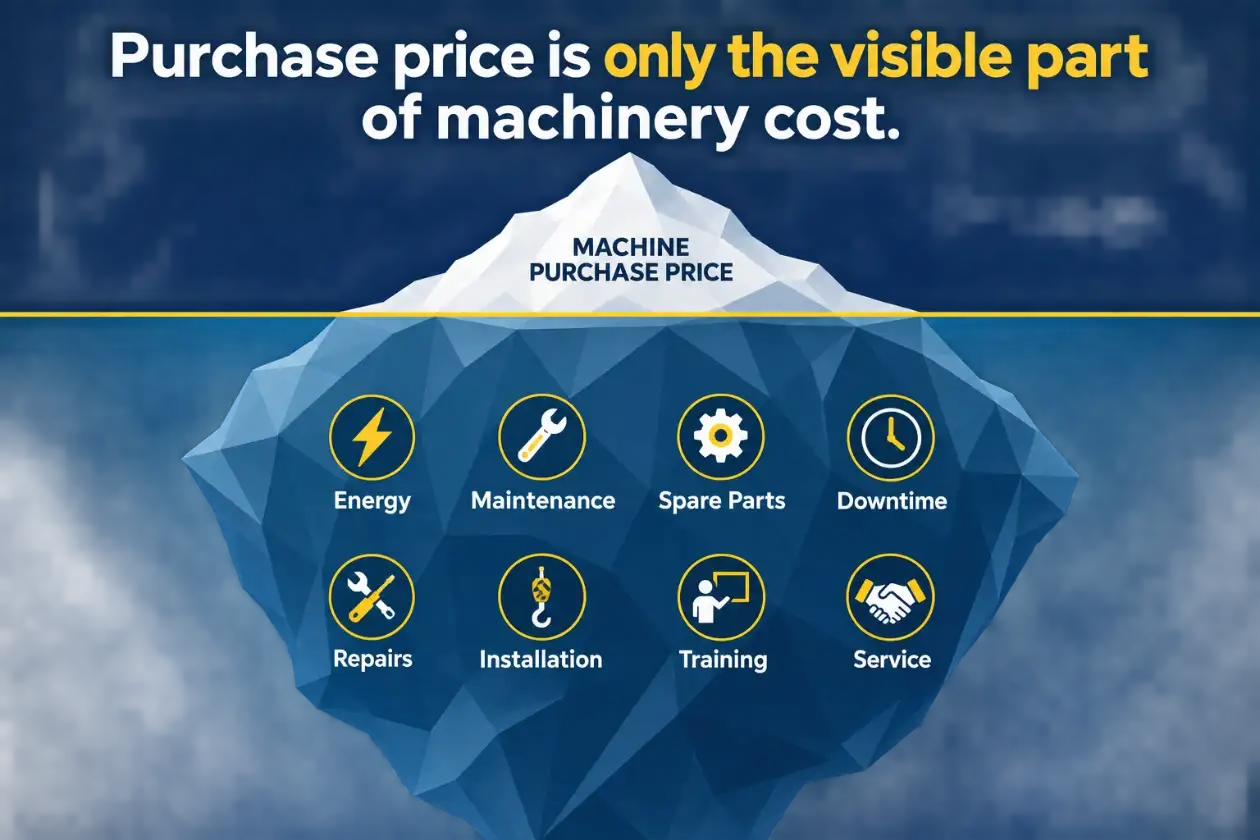 How to Compare Industrial Machinery SuppliersCompare industrial machinery suppliers using technical compliance, components, scope, testing, commercial terms, life-cycle cost and after-sales support,not price alone.Read: How to Compare Industrial Machinery Suppliers